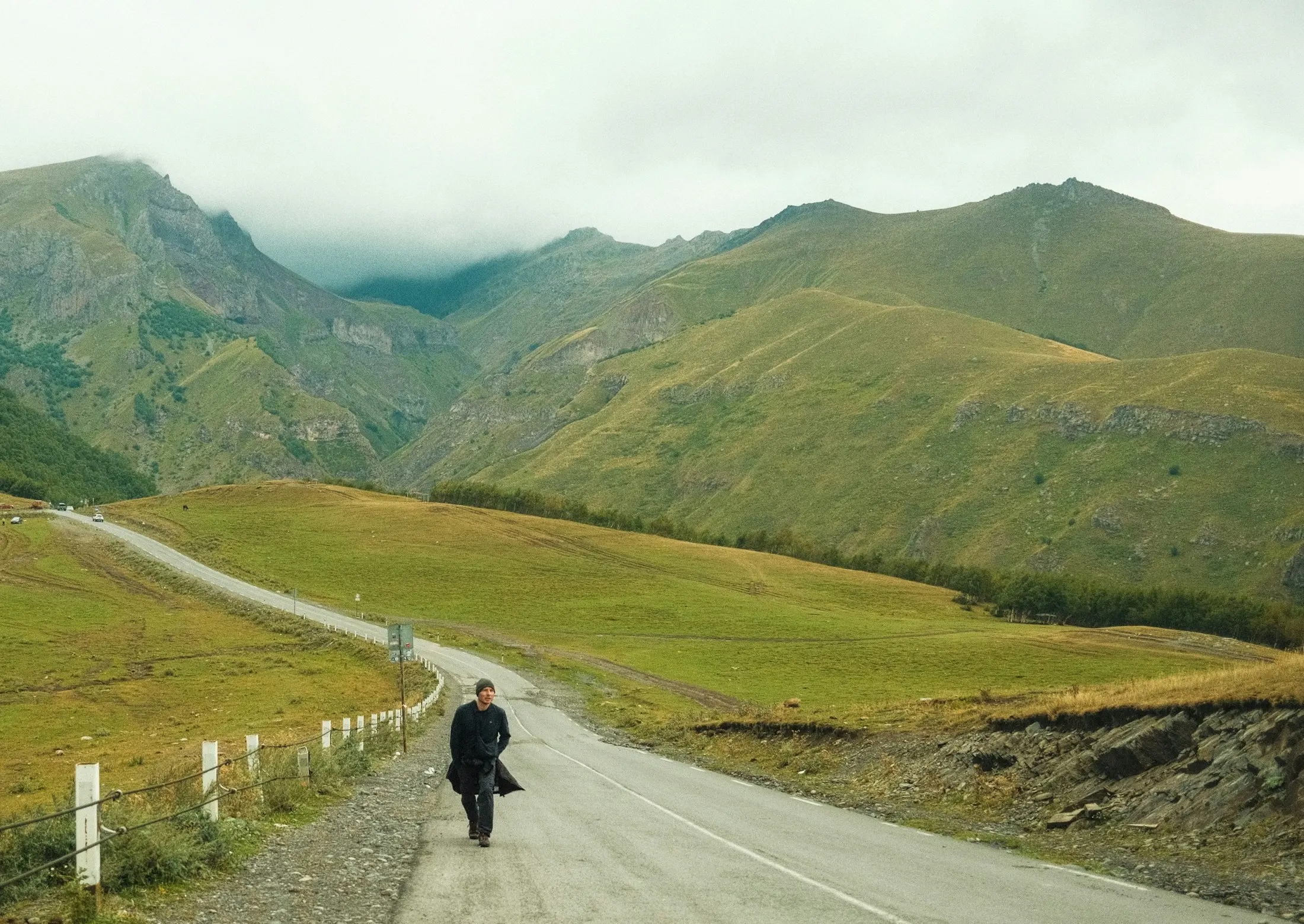
Two places at once
Living between countries means carrying one place while building a life in another. Each has something to teach. Neither has to be forgotten for the other to be loved.

My mornings usually begin with two days at once. On the Sapphire Coast the light is coming up over the water and the magpies are carrying on in the gums. On my phone, messages have been arriving overnight from Southern Africa, where many of my family ties and friendships are rooted. There is news from home, a question from an old friend, a voice note from a relative, a photograph of a gathering I could not attend. Before I have had my coffee, I have usually been in two hemispheres, two time zones and two rather different ways of seeing the world.
A great many people live like this now. Families spread across continents. Professionals whose clients, colleagues and parents are on the other side of an ocean. Children who speak one language at school and another at the dinner table. We are sometimes described as people caught between two places, as though the condition were a kind of homelessness. I have come to see it differently. Living between places is demanding and at times genuinely painful, but it can also be a strange privilege. It offers a double education, if we are willing to receive it.
What the coast has taught me
The part of New South Wales where we live is quiet in a way that took me some time to understand. Towns are small. People drive long distances and think nothing of it. The ocean sets much of the pace. A fair amount of local life organises itself around weather, tides and seasons.
What this place has taught me, more than anything, is the value of unhurried attention. When there is less noise, you notice more. You notice the change of light in autumn, the way a neighbour checks on an elderly resident without being asked, the patience of a community that knows it cannot rush the seasons. I had spent much of my working life moving quickly between cities, deadlines and jurisdictions. The coast has slowed me down in ways that have improved my thinking and, I hope, my temperament.
It has also taught me something about care for land and place. People here tend to speak about the bush, the rivers and the coastline with a kind of protectiveness. Living on this ancient continent, alongside the long and continuing connection of its First Nations peoples to Country, has made me more conscious that I am a guest in a place with a history far older than my arrival. That awareness feels like a healthy discipline for anyone building a life somewhere new.
What Southern Africa keeps teaching me
At the same time, the region I carry with me keeps teaching me things the coast cannot.
It teaches me about the strength of extended family and the obligations that come with it. In much of Southern Africa, the idea that you might succeed purely for yourself sits uneasily. Success is expected to be shared. That expectation can be heavy. I know many in the diaspora who feel its weight keenly. But it carries a moral seriousness I would not want to lose. It reminds me that prosperity has a purpose beyond private comfort.
It teaches me resilience and improvisation. Many people across the region build lives, businesses and institutions in conditions that would cause others to give up entirely. They are resourceful in ways that are rarely celebrated. They keep going with a mix of humour, faith and sheer persistence that I find deeply instructive.
It also teaches me about warmth. Greetings that take time. Visitors fed before they are asked their business. A sense that people matter more than schedules. When I carry those habits into a quieter, more reserved setting, I find that they are usually welcome, even if they take people a little by surprise.
Living between places is demanding and at times genuinely painful, but it can also be a strange privilege.
The temptation to compare
The great danger of living in two places is constant comparison. It is easy to fall into the habit of measuring each place by the other’s strengths. Here, the systems work, but people can seem distant. There, the warmth is extraordinary, but the uncertainty is exhausting. Comparisons like these hold some truth. If they become the main way we relate to either place, though, they leave us permanently dissatisfied. We end up living in neither, always half absent.
I have seen this in families who have relocated and I have felt both pulls myself. Some spend years in their new country with their hearts entirely elsewhere, never quite investing, never quite arriving. Others try so hard to fit in that they cut themselves off from the language, food and relationships that formed them. Later they feel a loss they struggle to name. Both responses are understandable. Neither, in my observation, tends to lead to peace.
What seems to work better is a kind of double faithfulness. You commit fully to the place where you live: its people, its institutions, its needs. You also keep faith with the place that formed you: its relationships, its memory, its unfinished business. The two commitments can coexist. I suspect each makes the other healthier.
There is a passage in the book of Jeremiah, written to people living far from home, that I find unusually practical: “And seek the peace of the city whither I have caused you to be carried away captive, and pray unto the LORD for it: for in the peace thereof shall ye have peace” (Jeremiah 29:7). The exiles are not told to forget where they came from. They are told to invest in where they are. Both instructions sit together in the same letter.
Gratitude without forgetting
Gratitude is perhaps the most important posture for anyone living between places. I am grateful for the safety and space my family enjoys here, for the schools and the coastline and the quiet. I am grateful, too, for everything Southern Africa has given and continues to give. It has given me perspective, purpose, relationships and a sense of where I come from in the deepest sense.
Gratitude for one does not require forgetting the other. A person can love a new home without pretending the old one did not matter. They can honour the old home without refusing to belong to the new one. Living this way takes some emotional effort. Phone calls at odd hours. Remembering birthdays in another time zone. Explaining each place to the other, patiently and often.
Each evening, when the coast goes dark and the working day across the Indian Ocean is only reaching its middle, I am reminded that I live in two places at once. Some days that feels like a strain. On better days it feels like a gift. It is an invitation to carry the best of each place into the other. In some small way, it lets me be a bridge between people who might otherwise never meet.